Face Liveness Detection API & Voice Biometrics Authentication
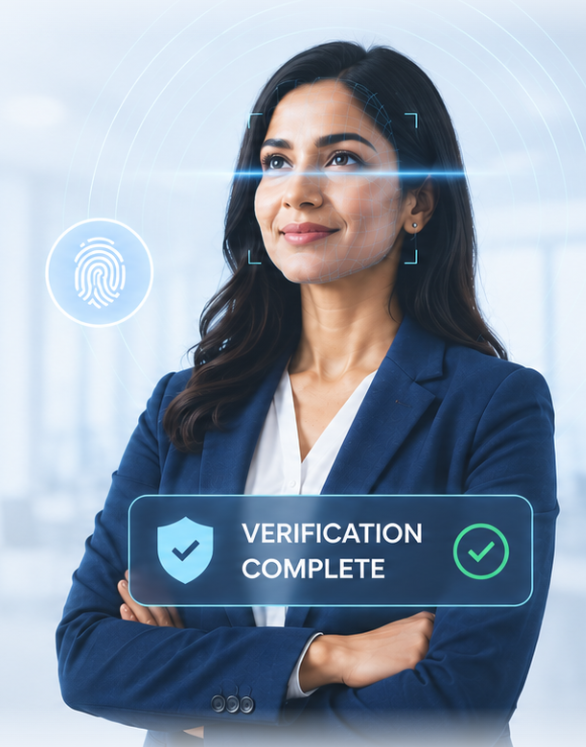
As digital services continue to expand, businesses need reliable ways to verify that a person is genuine and authorized to access an account or complete a transaction. Traditional passwords and one-time passwords can be compromised through phishing, credential theft, or social engineering. Modern biometric technologies offer a stronger approach by verifying unique human characteristics. Among the most useful solutions are a face liveness detection API and voice biometrics authentication, which can work together to create secure and convenient digital identity verification.
What Is a Face Liveness Detection API?
A face liveness detection API is a technology that determines whether the face presented during an online verification process belongs to a real, physically present person. It helps distinguish a genuine user from fraudulent attempts involving photographs, videos, masks, screen replays, or other presentation attacks.
Instead of simply matching a face against an identity document or stored photograph, liveness detection evaluates whether the person is actually present in front of the camera. Depending on the implementation, the technology can analyze facial movements, depth information, texture, lighting, and other signals to assess whether the submitted facial image or video represents a live individual.
Because an API-based solution can be integrated into websites, mobile applications, and digital onboarding platforms, businesses can add liveness capabilities without building the entire biometric infrastructure from scratch.
Why Face Liveness Detection Matters
Face verification alone may not always provide sufficient protection against sophisticated fraud. If an attacker obtains someone's photograph, they may attempt to use it during an identity verification process. A face liveness detection API adds an important security layer by checking the physical presence of the individual.
This technology can be particularly useful for:
- Digital KYC and customer onboarding
- Financial services and fintech applications
- Account recovery and authentication
- Remote employee verification
- Insurance applications
- E-commerce and high-value transactions
- Government and enterprise identity platforms
By combining face matching with liveness detection, organizations can improve confidence that the person being verified is both the correct individual and physically present.
Understanding Voice Biometrics Authentication
Voice biometrics authentication verifies an individual using characteristics of their voice. Every person's voice contains a combination of characteristics influenced by their vocal tract, speaking patterns, pronunciation, rhythm, and other acoustic features.
A voice biometric system converts relevant voice characteristics into a mathematical representation and compares it with a previously enrolled voice profile. If the characteristics sufficiently correspond, the system can authenticate the user.
Unlike conventional voice recognition, which primarily focuses on understanding spoken words, voice biometrics authentication focuses on identifying or verifying the speaker.
Benefits of Voice Biometrics Authentication
Voice-based authentication can provide a convenient additional security layer without requiring users to remember passwords or enter lengthy verification codes. It can be particularly valuable for applications where hands-free or conversational authentication is beneficial.
Organizations can use voice biometrics for customer authentication, call-center security, account access, fraud prevention, and identity verification. When combined with appropriate anti-spoofing mechanisms, voice biometrics can help reduce risks associated with voice recordings and impersonation attempts.
Combining Face and Voice Biometrics
Using face and voice together can provide a stronger multi-modal identity verification strategy. A face liveness detection API can establish that a real person is physically present, while voice biometrics authentication can provide an additional biometric signal associated with that individual.
For example, during remote onboarding, a customer could complete a facial liveness check and then provide a short voice sample. The platform can evaluate both signals as part of a broader identity verification workflow.
This multi-layered approach can improve security while maintaining a relatively simple user experience.
Choosing the Right Biometric Technology
When implementing biometric verification, organizations should consider accuracy, spoofing resistance, integration capabilities, scalability, privacy, and user experience. API performance and documentation are also important because developers need a reliable way to integrate biometric capabilities into existing applications.
A well-designed solution should support secure data handling, fast verification, robust fraud detection, and consistent performance across different devices and environments.
Conclusion
The combination of a face liveness detection API and voice biometrics authentication represents an important advancement in digital identity security. Face liveness technology helps confirm that a genuine person is physically present, while voice biometrics provides another unique biometric signal for authentication.
As organizations continue moving customer onboarding, authentication, and verification processes online, multi-modal biometric technologies can help create digital experiences that are both more secure and easier to use. Businesses that adopt these technologies strategically can strengthen identity protection while reducing dependence on vulnerable traditional authentication methods.

About Premium Author
This post has been authored and published by one of our premium contributors, who are experts in their fields. They bring high-quality, well-researched content that adds significant value to our platform.
You Might Also Like
Popular Categories
Stay Connected
Recent Posts